

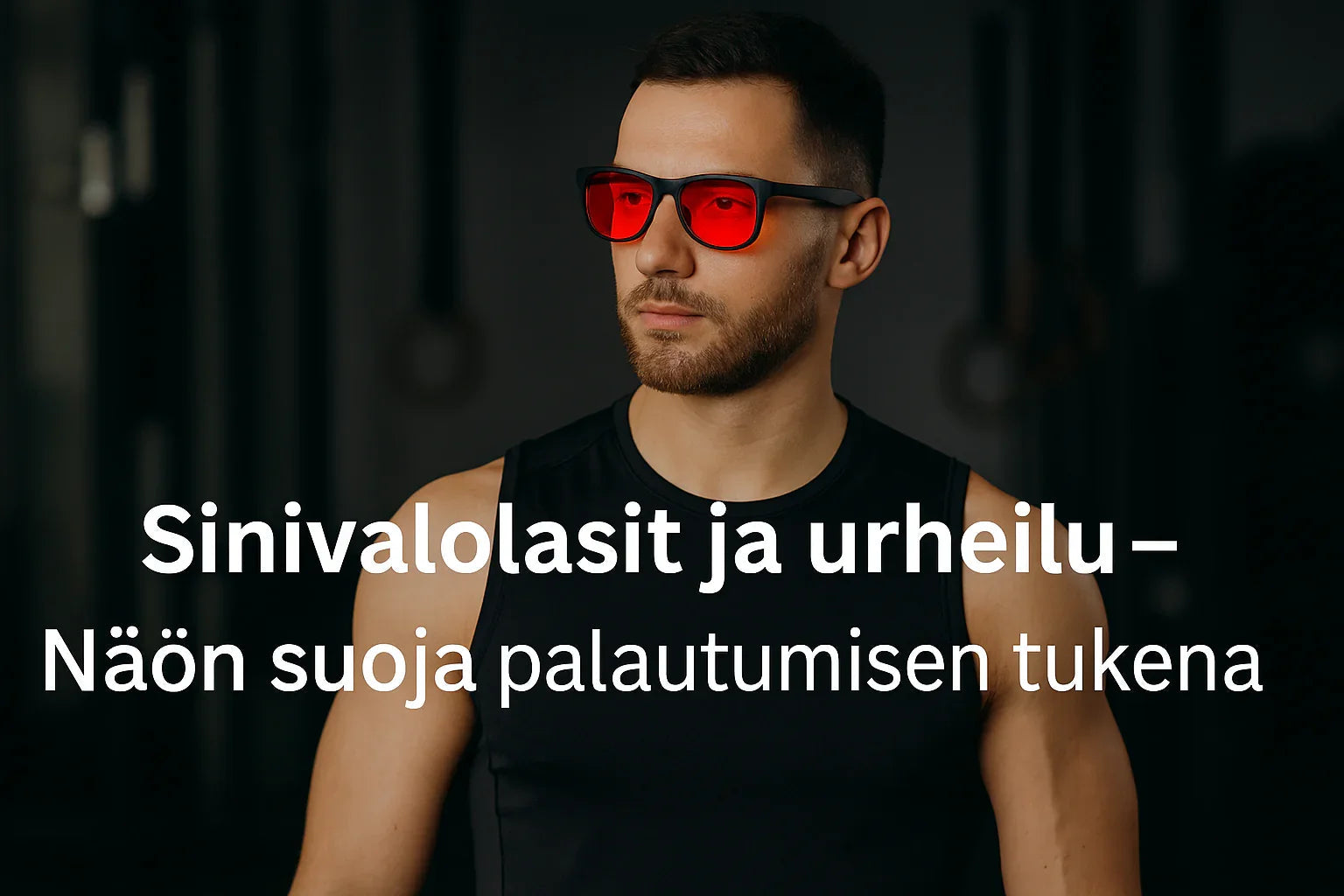
Blue light glasses and sports: can eye protection improve recovery and performance?
Blue light glasses and recovery in sports
Blue light glasses and sports may seem like a surprising combination, but when you consider the whole picture of training, recovery and sleep, the connection is natural. Most athletes and active people spend a lot of time in front of screens. Phones, computers and televisions make up the rhythm of everyday life, and in the evening their light can interfere with the natural process of falling asleep.
Sleep is a key part of recovery, as it helps the body repair damaged tissues, strengthen neural connections, and build the foundation for subsequent training. If sleep is delayed or its quality deteriorates, the effects are quickly visible in alertness, mood, and training performance.
How blue light glasses support sleep and recovery
The idea behind blue light glasses is simple. They filter out the blue light from screens, which can signal to the brain that it’s still day in the evening. When the disruptive effects of evening light are reduced, it’s easier for the body to transition to sleep. For many athletes, this means easier falling asleep, deeper sleep, and therefore smoother recovery. The effect may be small, but in sports, even small margins matter.
Blue light glasses to support training and concentration
In addition to recovery, eye strain directly affects the quality of your training. Long workdays and screen time make your eyes tired and sore, which impairs your concentration. By reducing eye strain a little, your concentration improves and the risk of headaches decreases.
This is especially valuable in sports where reactions and precise observation are crucial. In ball sports, decisions are made in the blink of an eye. In martial arts, reading situations and subtle anticipation of movement are an advantage. When your eyes remain alert, decision-making also becomes clearer.
The importance of day and evening lighting for athletes
It is useful to understand that daytime and evening lighting have different roles. During the day, bright light supports alertness and motivation. A morning walk or workout in natural light can boost your energy and set a good rhythm for the whole day.
In the evening, the opposite is true. It's a good idea to calm down, reduce screen time, and use blue light blocking glasses if you still need to use devices for a while. The goal is to send a clear message to your body that it's time to recover.
Blue light glasses as part of an athlete's routine
However, blue light blocking glasses are not a shortcut to happiness. They work best as part of a holistic approach that includes good sleep hygiene. A regular bedtime, a cool and dark bedroom, avoiding caffeine late at night, and scheduling your heaviest workouts earlier in the day all help.
When these basics are in place, the extra benefit of glasses can be just that little advantage that is reflected in the quality of the next day's training or the brightness of the competition situation.
Who are blue light glasses suitable for in sports?
The idea works for a variety of exercisers. A competitive athlete can wear blue light glasses during the last hours of the evening before going to bed, so that sleep starts consistently even on travel days and during competition week. A gym user will benefit especially on weeknights, when it's easy to scroll through your phone late after work. An active exerciser who has a little trouble calming down after a workout may find the glasses helpful in establishing a routine.
Practical tips for using blue light glasses
- Put your glasses on in the evening a couple of hours before going to bed if you still use devices.
- Dim the lights in your home and keep your bedroom as dark as possible.
- During the day, don't block out all light, but seek refreshment from natural light and appropriate activity.
- Monitor your sleep quality, for example with a sports watch, over a period of a week or two and assess whether you notice a change.
Summary
Blue light blocking glasses won't automatically make you a better athlete, but they can be an easy and inexpensive addition that supports sleep, recovery, and focus. When the whole thing is in order, even a single improvement can be seen in performance.
In sports, the edge is often created by subtle choices that are repeated day after day in everyday life. This is one of those choices.
👉 Explore our blue light glasses and find the model that supports your training and recovery .
📚 Read also
- ➡️ 24 hours of blue light glasses: How they support you from morning to night
(Everyday use + after training) - ➡️ How blue light affects sleep and how you can improve your sleep
(Emphasizes the importance of recovery) - 👉 See all blue light glasses here
(Check out the entire selection and find the model that's right for you)


